

The first foundations that are established in the life of every human being are formed very early through the recognition of the difference between mommy and me, then through the understanding of ownership expressed in the word mine, and then through the courageous use of the word no, as a child begins to distinguish what is me and what is not me. All together, these stages represent the healthy and necessary progression of child development as a child slowly but surely learns independence from the mother and from the home environment. This continual separation from the womb is a process that God himself designed and affirms when he guides that a man shall leave his father and mother and be joined to his wife, demonstrating that separation and distinction are not signs of rebellion but of maturity and wholeness according to God’s design as seen in Genesis 2:24.
Therefore a man shall leave his father and his mother and hold fast to his wife, and they shall become one flesh.
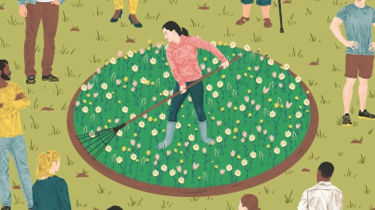
From the very beginning of creation, God establishes the reality and goodness of boundaries by clearly distinguishing his role from that of his creation, as Genesis 1 describes the Spirit of God hovering over the waters while God himself speaks commands that bring order, form, and life into existence, showing intentional separation of function and authority. As creation unfolds, God consistently draws lines by separating light from darkness, land from sea, and day from night, assigning each created being a domain in which it may flourish. God reflects the truth that boundaries are not restrictive punishments but purposeful structures that allow freedom, fruitfulness, and harmony within God-ordained limits, as affirmed in Psalm 104:9 where God sets boundaries for the waters so that they may not pass.
God further demonstrates the spiritual necessity of boundaries in his relationship with humanity by clearly communicating his expectations and limits, most notably when he instructs Adam and Eve not to eat from the tree of the knowledge of good and evil and plainly states the consequence of death should that boundary be violated, as recorded in Genesis 2:16 and 17.
And the Lord God commanded the man, saying, “You may surely eat of every tree of the garden, but of the tree of the knowledge of good and evil you shall not eat, for in the day that you eat of it you shall surely die.”
When that boundary is crossed, God does not revoke his word or remove the consequence but allows Adam and Eve to experience the result of their choice, which reveals that enforcing consequences is not an absence of love but an expression of truth and faithfulness. Scripture tells us that God is not a man that he should lie and that his word does not return void, as seen in Numbers 23:19 and Isaiah 55:11, thereby teaching us that healthy boundaries must be paired with consistent consequences if they are to hold meaning and integrity.

In addition to calling us to set and enforce our own boundaries, God also commands us to honor the boundaries of others, reminding us that love is not self-seeking and does not insist on its own way, as written in 1 Corinthians 13:5, and that we are to treat others as we would want to be treated, as Jesus teaches in Matthew 7:12. This means respecting limits, acknowledging personal responsibility, and refusing to manipulate, coerce, or violate the emotional, physical, or spiritual space of another person, since honoring boundaries is deeply connected to honoring the image of God in each individual, as affirmed in Genesis 1:27.
As we move through this holiday season with friends and family, let us align ourselves with God’s word as the ultimate guide for healthy relationships by courageously setting clear boundaries, faithfully enforcing appropriate consequences, and humbly honoring the boundaries of others. We should set, enforce, and honor healthy boundaries knowing that scripture reminds us that God is a God of order and not confusion, as stated in 1 Corinthians 14:33, and as we imitate him in this way, we create space for peace, mutual respect, and genuine love to grow, allowing us not only to survive relational challenges but also to live healthy, grounded, and God-honoring lives.
By Clara Rincuni


Add comment